Core Terminology
Every sport has its language, and pigeon racing is no different. For newcomers, the terminology can feel overwhelming at first. This guide introduces essential terms — from young birds and widowhood to clocking and velocity — so conversations become clearer and learning becomes easier.
Common Racing Pigeon Terms
Every sport has its own language, and pigeon racing is no different.
For newcomers, the terminology can feel overwhelming at first. Conversations move quickly, abbreviations are used casually, and people talk about birds, lofts, race systems, results, and management as if everyone already knows what they mean.
But no one starts out knowing the language.
Understanding the basic terms helps you ask better questions, follow race discussions, interpret advice correctly, and avoid costly misunderstandings.
This is not an advanced glossary. It is a working foundation — a place to start.
Some terms may vary by country, club, or flyer, but these are the basics you are likely to hear as you enter the sport.
The People
Fancier
A person who keeps, breeds, trains, or races pigeons.
Flyer
Another common term for someone who races pigeons.
Club
A local organization that brings flyers together, organizes races, and coordinates members.
Combine
A larger organization made up of multiple clubs. Combines usually organize broader race events involving more flyers and a wider area.
The Birds
Young Bird / YB
A bird in its first year of life.
Old Bird / OB
A bird older than one year, usually raced separately from young birds.
Cock
A male pigeon.
Hen
A female pigeon.
Band Number / Ring Number
The identification number on the band placed on a pigeon’s leg. It is used to track ownership, race entry, and records.
Stray
A pigeon that ends up at a loft other than its own. This can happen if a bird gets lost, tired, injured, or pulled off course.
Homing Ability
A pigeon’s natural ability to return to its home loft from a distance. This is the foundation of the entire sport.
The Loft
Loft
The structure where pigeons live and are managed. It is where birds are fed, watered, rested, bred, trained, and observed.
Section
A divided area within the loft. Sections may separate young birds, old birds, cocks, hens, breeders, or birds being managed differently.
Perch
A resting space for a bird inside the loft.
Nest Box
A space used by paired birds for nesting, breeding, or certain racing systems.
Trap
The entry system birds use to return into the loft after flying.
Trap Training
Teaching birds to enter the loft quickly and reliably through the trap. This matters because race timing depends on the bird getting inside.
Loft Flying
Exercise flying around the home loft. This is different from road training, where birds are taken away from home and released.
Training & Racing
Training Toss
A controlled release used to build fitness, confidence, and orientation. Birds are taken away from the loft and released to fly home.
Road Training
Transporting birds away from the loft and releasing them to return home. Road training is a major part of preparing birds for racing.
Basketing
Placing birds into baskets or crates for training or racing.
Basket Night / Shipping Night
The night birds are brought to the club, entered into a race, and placed in baskets for transport to the release point.
Race Point / Release Point
The location where birds are released for a race.
Liberation
The official release of birds at the race point.
Clocking
Recording the exact time a bird returns from a race.
Clock / ETS
The system used to record arrival times. ETS stands for Electronic Timing System.
Velocity
The calculated speed of a bird in a race, based on distance flown and time taken. Race results are usually ranked by velocity because each loft may be a different distance from the release point.
Racing Systems
Racing systems are different ways flyers manage birds to influence motivation, condition, and performance. These systems can get complex, so beginners do not need to master them right away.
For now, it helps to recognize the names.
Natural System
Birds are raced while paired and may be sitting eggs or raising young.
Widowhood
Cocks and hens are separated and managed so their bond creates motivation to return quickly.
Roundabout
A structured separation system where both cocks and hens may be raced.
Celibacy
Birds are kept unpaired during the racing season.
Health & Condition
Condition
The overall physical readiness and health of a bird.
Form
A bird’s peak physical state, when fitness, recovery, energy, and readiness come together.
Grit
A mineral mixture provided to support digestion and mineral needs.
Moult / Molt
The natural shedding and replacement of feathers. Feather quality matters in racing, so the moult is an important part of the yearly cycle.
Recovery
How well a bird bounces back after training or racing.
Droppings
Bird waste. Not glamorous, but important. Flyers often watch droppings as part of basic health observation.
Learning the Language Takes Time
No one absorbs this vocabulary immediately. Experienced flyers often forget how foreign it once sounded, and asking for clarification is part of learning.
Understanding terminology does not make someone an expert, but it does make conversations clearer. It helps you follow advice, understand race results, ask better questions, and make sense of what is happening around you.
The language of pigeon racing reflects decades, and sometimes generations, of experience. Learning it is part of entering the sport.

How Much Time Does Pigeon Racing Actually Take?
Is pigeon racing a hobby or a part-time job? The honest answer depends. But the sport is not passive. This post outlines daily routines, race-season demands, and the time commitments beginners often underestimate.
One of the most common questions beginners ask is how much time pigeon racing actually takes.
It’s not something that can be answered in a few sentences. And the honest answer is that it depends.
It depends on the size of the loft, the number of birds, your goals, your race schedule, and the time of year. But there is one thing beginners should understand early:
Pigeon racing is not passive.
It is not a hobby you can check in on once in a while when you feel like it. The birds need daily care, consistent management, and steady observation.
For some people, that rhythm becomes one of the best parts of the sport. For others, it can be way more work than they expected.
That is why understanding the time commitment matters before getting in too deep.
A Hobby — Or a Part-Time Job?
From the outside, pigeon racing may look simple.
✓ Feed the birds.
✓ Let them out.
✓ Send them to a race.
✓ Wait for them to come home.
But the reality is much more structured than that.
There is the daily routine, the seasonal work, the training schedule, race preparation, cleaning, observation, and the constant small decisions that come with managing living animals.
A small beginner loft may not take all day. But it does take time every day.
That is the part many beginners underestimate.
The Daily Routine
Even a modest loft requires daily care.
At minimum, that usually includes feeding, changing water, checking the birds, and doing basic cleaning or scraping. For a small beginner loft, this might take around 30 to 60 minutes per day.
Not once in a while. Every day.
That daily routine is what keeps the loft functioning and the birds healthy. It also gives you a chance to notice small changes before they become bigger problems.
Skipping days or rushing through chores can create issues quickly, especially during training and race season.
Consistency matters. The birds rely on it.
The Workload Changes Through the Year
The amount of time pigeon racing takes is not the same all year. The work shifts around the seasons.
During the off-season, the routine may be lighter. The focus is usually on basic feeding, cleaning, monitoring the birds through the moult, and maintaining the loft.
This can be the quieter part of the year. But quieter does not mean hands-off.
Birds still need daily care, and the loft still needs attention.
During training season, the time commitment increases big time.
The birds need regular training tosses, feeding may be adjusted, weather needs to be watched, and the flyer has to make decisions about when and where to train.
This is when the sport starts to feel more structured.
During race season, the schedule becomes even more demanding. There are basket nights, race preparation, clocking birds, tracking results, and managing recovery after races. Race weeks can quickly become built around the birds.
For many flyers, this is part of the excitement. For beginners, it can come as a surprise.
The Hidden Time Suck: Training Tosses
One of the biggest hidden time commitments in pigeon racing is training tosses.
Again, sounds simple on paper.
✓ Put the birds in the basket.
✓ Drive them out.
✓ Release them.
✓ Go home.
But depending on where you live, that “quick toss” can take much longer than expected. You may be driving birds 10, 20, 50, or more kilometres from home.
You may be watching the weather, avoiding poor visibility, checking wind direction, or coordinating with other flyers.
By the time the birds are loaded, driven out, released, and everything is cleaned up afterward, a training session can take a significant chunk of the day.
Some flyers coordinate group training to share the workload. Others adjust their training schedule around work, family, and available daylight.
There is no single system that works for everyone. But there does need to be a plan.
And with the gas prices these days? The cost of training your birds can add up real quick.
Watching Your Birds Is Part Of The Work
Time in the loft is not only about chores. It is also about learning what is normal for your birds.
Experienced flyers notice small details that beginners may not see right away — how the birds move, how they eat, how quickly they trap, how they fly, and how they recover after training or racing.
That awareness comes from showing up consistently.
A bird may not look obviously sick at first. A performance issue may not appear suddenly. Often, the clues are small: a slower trap, a shift in energy, a change in appetite, different droppings, or a bird sitting differently than usual.
The more time you spend with your birds, the better you become at noticing those changes.
That is one of the most important skills in the sport.
Can You Race Pigeons With a Full-Time Job?
Yes. Many flyers do.
But it requires routine and discipline.
Pigeon racing tends to fit best into a structured schedule. The birds do not need someone standing in the loft all day, but they do need consistent care.
If your daily routine is unpredictable, management becomes harder.
Feeding, cleaning, training, loft flying, race preparation, and recovery all need to fit somewhere.
That does not mean beginners need unlimited free time.
It does mean they need to be realistic.
A small loft is usually much more manageable than a large one.
A simple program is usually easier to maintain than an ambitious one.
Starting modestly gives you a better chance to build a routine that actually fits your life.
The Family and Lifestyle Side
The time commitment doesn’t just affect the flyer.
It can affect the whole household.
Pigeon racing can shape mornings, evenings, weekends, vacation plans, and family routines — especially during training and race season. Basket nights, race days, training tosses, feeding schedules, cleaning, and recovery care all have to fit somewhere.
That time has to come from somewhere.
For some families, the birds become part of the shared routine. For others, the schedule can create tension if everyone is not prepared for how much time the sport actually takes.
Time away also requires planning.
You cannot simply leave for a weekend or go on vacation without making arrangements for the birds. Someone still needs to feed them, change water, clean, check on their condition, and make sure the loft is secure.
And not everyone has a neighbour, friend, or family member who is comfortable or willing to step in.
That does not mean pigeon racing cannot fit into family life.
In fact, racing pigeons can be a great family affair. Growing up, I loved spending time in the loft with my dad after school and on weekends.
But beginners should understand that the commitment reaches beyond the loft. It affects free time, travel, and the people around you.
Being realistic about that from the start can prevent a lot of frustration later.
The Reality
For a small beginner loft, a realistic baseline might be around 30 to 60 minutes of daily care.
During training and race season, that time increases. Training tosses can add hours, basket nights and race days add structure to the week, and more birds increase the workload.
The exact number of hours will vary from one flyer to another, but the pattern is the same:
Pigeon racing rewards consistency.
Not occasional bursts of enthusiasm.
Not rushing through chores.
Not showing up only on race day.
The sport is built on steady effort, daily care, and learning to pay attention.
For the right person, that commitment becomes part of the appeal. The birds become part of the rhythm of daily life.
And that rhythm is where much of the real learning happens.

What Pigeon Racing Actually Involves
Pigeon racing may look simple from the outside — birds are released, they fly home, and the fastest wins. But race day is only the visible result of consistent daily management, gradual training, and long-term discipline. This post outlines what the sport truly requires behind the scenes — from routine care to weather strategy to the emotional realities many beginners don’t anticipate.
To someone watching from the outside, pigeon racing looks pretty straightforward.
Birds are released. They fly home. The fastest one wins.
And at its core, that is true.
But what you see on race day is only the final result of everything that happens behind the scenes.
Pigeon racing is not just about speed. It is about preparation, daily care, training, observation, decision-making, and learning how to manage birds through every stage of the year.
Race day may be the most visible part of the sport, but it is not where the real work begins.
It Starts in the Loft
Successful racing begins long before a bird ever sees a race crate.
The loft is the centre of the entire program. This is where birds are housed, fed, watered, trained, rested, paired, raised, and managed. It is also where small decisions are made every day — decisions that can affect health, condition, motivation, and performance.
A racing loft is not just a place where pigeons eat and sleep. It is the foundation of the whole sport.
Good flyers pay close attention to the condition of the loft, the behaviour of the birds, and the rhythm of the daily routine. They are watching how the birds eat, how they fly, how they trap, how they recover, and how they look from one day to the next.
Those observations matter because pigeon racing is not a sport where everything can be measured on paper. A lot of it comes down to learning what is normal for your own birds.
Daily Management Matters
There is no shortcut around daily management.
Even before training begins, the birds need consistent care. That means feeding, fresh water, cleaning, checking the birds, watching droppings, monitoring condition, and adjusting the routine based on the season, weather, and goals of the loft.
This doesn’t look dramatic or particularly interesting from the outside.
But that is where the foundation is built—quiet and repetitive work.
Healthy birds do not happen by accident. Reliable birds do not happen by accident. Good condition does not happen because someone shows up on race day and hopes for the best.
The daily routine matters because the birds rely on consistency. Over time, that consistency is what gives the flyer a better understanding of the loft and better success.
Training Is Gradual and Intentional
Young birds are not simply taken far from home and expected to figure it out. Nor do they leave the loft knowing how to get back home from 200 km away.
Training is gradual. Before birds are ever road trained, they first need to learn the loft itself. They need to know where home is, how to enter through the trap, how the routine works, and how to fly confidently around the loft.
From there, training usually progresses in stages: short flights close to home, small increases in distance, repeated tosses, careful attention to weather, and observation after each return.
The goal is not only fitness. It is orientation, confidence, and reliability.
Rushing this stage is one of the common places where beginners can run into trouble. Birds that are pushed too fast may struggle, get lost, or fail to develop the steady confidence needed for racing.
Training is not about throwing birds into the deep end. It is about building them up.
Race Preparation Is More Than Sending Birds
A race does not begin when the birds are released. It begins in the days leading up to it.
Flyers are making decisions about which birds are ready, which birds should stay home, how the weather looks, how far the race is, how the birds are recovering, and whether the loft is in good condition for the challenge ahead.
There is also the practical side. Birds need to be prepared for basketing. In most club racing, birds are taken to a shipping location before being transported together to the release point. They are entered, transported, released with other birds, and then clocked when they return home.
For someone new to the sport, it can be easy to focus only on the release and the result. But race preparation involves much more than that.
The flyer is constantly weighing condition, timing, distance, experience, and risk. Some decisions are obvious. Others come with experience.
Genetics Matter — But They Are Not Everything
There is a strong focus in pigeon racing on bloodlines, and for good reason.
Selective breeding plays an important role in the sport. Families of birds are developed over time for speed, endurance, homing ability, recovery, and consistency.
But genetics are only one part of the picture.
A well-bred bird still needs proper care, training, health management, and a loft environment that allows that potential to develop. Good birds can be limited by poor management, while average birds can sometimes surprise people when they are managed well.
Genetics may influence what a bird is capable of. Management helps determine how close the bird gets to that potential.
That is one of the hardest lessons for beginners to fully understand at first. The birds matter, but the flyer matters too.
Motivation Systems Add Another Layer
As flyers gain experience, they may use different systems to motivate their birds.
Some fly birds on the natural system, where the birds’ normal nesting and breeding behaviour is part of the racing setup. Others use systems like widowhood or celibacy, where separation, access to mates, or nest box motivation are managed more deliberately.
These systems can be very effective in experienced hands, but they are not magic solutions. They require timing, discipline, observation, and a strong understanding of the birds.
For beginners, the priority should usually be learning the basics first: a clean, healthy loft, a manageable number of birds, a steady routine, gradual training, and good observation.
Without those foundations, advanced systems can create more confusion than progress.
Weather Is Always a Factor
Pigeon racing depends on natural conditions, and in Ontario, weather can change the picture quickly.
Flyers may be dealing with open farmland, rolling terrain, lake-influenced weather, changing wind patterns, heat, humidity, rain, fog, storms, and sudden shifts in conditions. Even within the same club, birds may be flying home to different areas, so one race can affect lofts differently depending on location.
That matters.
Wind direction can change how birds work their way home. A tailwind, headwind, or crosswind can affect the difficulty of a training toss or race. Heat and humidity can place extra demands on the birds, especially during longer flights. Rain, fog, storms, poor visibility, and sudden changes in conditions can all affect how safe or fair a release may be.
Even on days that look fine from the ground, flyers still have to think carefully.
What is the wind doing?
Is visibility clear?
Are storms moving in?
Is the heat building? Is the humidity high?
Are the birds ready for this distance under these conditions?
For beginners, this is one of the biggest lessons in the sport. Weather is not background noise. It is part of the decision-making process.
Some days are good training days. Some days are not.
Some races are straightforward. Others become difficult because of conditions outside anyone’s control.
This is one of the reasons pigeon racing is never purely about having the fastest bird. It is also about judgment.
Knowing when to train, when to wait, when to send a bird, and when to hold back are all part of the sport.
The Emotional Side Is Real
Pigeon racing is competitive, but it is also personal.
You raise the birds. You train them. You watch them develop. You learn their habits, their strengths, and their quirks. And then you send them out, knowing there is always risk.
Not every bird comes home. Weather changes. Predators exist. Young birds make mistakes. Sometimes, even good birds are lost.
That reality is part of the sport, and it is something beginners need to understand.
For many flyers, the attachment to the birds is one of the things that makes the sport meaningful. The wins matter, but so does the process of raising, managing, and watching birds develop over time.
There is pride in a good result. But there is also pride in seeing a young bird learn, trap well, return from training, recover properly, and grow into a stronger, more reliable racer.
The sport is competitive, but it is also deeply connected to the birds themselves.
What Beginners Often Discover
Many newcomers enter pigeon racing thinking success comes from one main thing: better birds, more birds, expensive birds, the right bloodline, or the right system.
But over time, most discover that the sport is much more layered than that.
Small, well-managed lofts can be very effective. Observation is more valuable than theory. Consistency matters more than excitement. And patience is one of the most important skills a flyer can develop.
Pigeon racing rewards people who are willing to learn slowly, pay attention, and build a strong foundation before chasing results.
So What Does It Really Involve?
At its simplest, pigeon racing involves releasing trained birds and timing how quickly they return home.
But in real life, it involves much more than that. It involves daily care, loft management, gradual training, race preparation, weather judgment, health monitoring, breeding decisions, motivation systems, and long-term learning.
It involves discipline, patience, and paying attention when nothing exciting seems to be happening.
The release truck and clocking system may define race day, but the real work happens quietly, day after day, in the loft.
That is where birds are developed. That is where flyers learn. And that is where pigeon racing really begins.

Bird Acquisition
Buying birds is one of the most exciting parts of entering the sport — and one of the most common places beginners make mistakes. From starting too large to overvaluing bloodlines, this post explains how to approach bird acquisition thoughtfully and why management skill often matters more than price tags.
One of the most exciting parts of entering pigeon racing is buying birds.
It’s also one of the places where beginners can move too fast.
At the start, it’s easy to feel like the birds are the answer. The better the birds, the better the results. The more birds you have, the better your chances. The stronger the bloodline, the faster you’ll get ahead.
That thinking makes sense from the outside.
But experience tends to correct it pretty quickly.
In pigeon racing, birds matter. Bloodlines matter. Genetics matter.
But they are only part of the picture.
A good bird still needs good management, a healthy loft, consistent training, and a flyer who is learning how to observe, adjust, and make decisions.
That’s why bird acquisition is not just about buying pigeons.
It’s about learning how to start wisely.
Common Beginner Assumptions
Many new flyers assume that success comes from having more birds, spending more money, or chasing stronger pedigrees.
In reality, those things alone rarely guarantee results.
A larger number of birds can create pressure before you have the experience to manage them properly. Expensive birds do not automatically produce success. And strong bloodlines still need the right conditions, management, and training to develop.
In most cases, your first birds are not simply birds to race.
They are birds to learn from.
Start Smaller Than You Think
One of the most common beginner mistakes is starting with too many birds.
The reasoning makes sense: more birds seem to mean more opportunities to race, more chances to get birds home, and possibly more chances to win.
What beginners often overlook is that more birds also mean more feed, more cleaning, more health monitoring, more training time, higher race entry fees, and far more decisions to make.
It also becomes easier to miss small problems before they grow into larger ones.
A smaller group of birds gives beginners room to learn.
It allows for closer observation, easier health management, lower financial pressure, and more time to understand what is actually happening inside the loft.
You can learn individual habits, notice changes in appetite or behaviour, and better understand condition, recovery, trapping, and flying patterns.
Those observation skills matter.
A large loft can hide problems, while a smaller loft makes them easier to spot.
Many experienced flyers say they would start smaller if they were beginning again — not because they regret getting birds, but because learning the sport is easier when the numbers are manageable.
Buy From People You Can Learn From
Where you buy birds matters just as much as what you buy.
For beginners, one of the most valuable things another flyer can provide is not simply a bird, but guidance.
A reputable and transparent flyer can help you understand what you’re buying, why the birds may suit your goals, and how they manage their own loft.
Ideally, you should be able to visit the loft, observe the conditions the birds are kept in, ask about health practices and performance records, and learn how the birds are bred, trained, and raced.
Support after the purchase also matters.
A beginner buying from someone local and willing to answer questions may gain far more than they would from purchasing a bird with a famous pedigree but no mentorship behind it.
Birds from local flyers can also be a practical starting point. They may come from lofts flying similar routes, weather patterns, and race conditions, which can make the learning curve a little easier for a beginner.
Just as important, buying locally often gives you access to someone you can actually talk to when questions come up.
In the early stages, mentorship is often more valuable than genetics.
A good mentor can help you avoid common mistakes, understand local race conditions, and make smarter decisions as you build your own program.
Bloodlines Are Important But…
Selective breeding is a respected and important part of pigeon racing.
Strong bloodlines exist for a reason. Families of birds are developed over time based on performance, endurance, speed, homing ability, recovery, consistency, and suitability for certain race distances.
But bloodlines are not magic.
A strong pedigree cannot compensate for poor loft conditions, inconsistent training, overcrowding, weak health management, lack of observation, or inexperience.
Good birds still require good management.
This is where many beginners become disappointed. They expect the pedigree to do more than it realistically can.
A bird may have excellent potential, but that potential still needs to be developed through proper care, consistency, and experience.
A bird bred for one style of racing, distance, or program may also not be the best fit for a beginner just trying to build a steady foundation.
Not every good pigeon is the right pigeon for every loft.
Auctions and Impulse Buys
Auctions can be exciting.
They can also be risky for beginners.
It’s easy to get caught up in names, pedigrees, photos, race results, and the feeling that one bird might completely change your loft.
Without experience, however, it can be difficult to know what you are truly looking at.
Before buying through auctions, it helps to understand bloodline history, performance consistency, health protocols, the difference between breeding value and racing value, and whether a bird actually suits your local race conditions and long-term goals.
An expensive bird may be well bred.
That does not automatically make it the right bird for you, especially in the beginning.
Learning first and buying strategically later is usually the better path.
Quality Over Quantity
It can also be tempting to collect birds from many different sources.
The problem is that a scattered group can make it harder to evaluate what is working, what is not, and what direction your loft is actually taking.
A few healthy, well-bred birds managed properly will teach you far more than a large and scattered collection.
Your first goal should not be building a large loft.
Your first goal should be learning how to manage birds correctly.
That means learning the daily rhythm of the loft.
Feeding.
Cleaning.
Observing.
Training.
Handling.
Monitoring health.
Preparing for races.
Understanding what changes from day to day.
A smaller and more consistent group of birds gives you a better chance to develop those skills.
Expansion can always come later, once your routine is steady, your understanding is stronger, and your goals are clearer.
Health Comes First
Before purchasing birds, beginners also need to think seriously about health.
New birds can introduce problems quickly if they are brought into the loft without preparation, which is why quarantine matters.
Quarantine should be planned before new birds come home — not figured out once they are already in the loft.
Before adding birds, it helps to understand basic quarantine procedures, disease prevention, signs of illness, how to observe droppings and behaviour, when to separate birds, and how to introduce new birds safely.
Many early loft problems begin with rushed acquisitions.
A bird may appear healthy at first glance, but stress, transport, and a new environment can reveal issues quickly.
Taking health seriously from the beginning protects the birds you already have and helps build better habits as a flyer.
A Practical Beginner Approach
A practical approach would be to start with a modest number of birds, buy from someone willing to answer questions, prioritize healthy and well-managed birds over impressive names, and focus on learning loft management before chasing prestige.
Avoid impulse buying.
Be cautious about collecting birds from too many places.
Expand only when your routine feels steady.
Bird acquisition is not a race. There will always be more birds to buy, another pedigree to chase, another auction, another bloodline, and another opportunity.
What matters most is the foundation you build early on.
The sport rewards long-term thinking.
Beginners who start small, learn carefully, and buy with intention usually give themselves the best chance of building something that lasts.

The Realistic Cost of Pigeon Racing
The financial side of pigeon racing varies widely depending on loft size, bird numbers, and competitive goals. From initial setup to ongoing feed and race fees, this post provides a practical overview of where money is typically spent — and why patience and steady scaling often matter more than large early investments.
Costs in pigeon racing can vary widely. Loft size, number of birds, equipment, and personal goals all play a role.
For some, it stays relatively modest. For others, it can become a significant investment over time. Most beginners land somewhere in the middle.
At first glance, the costs can seem straightforward. But like most hobbies, what you see at the beginning is only part of the picture.
Initial Setup Costs
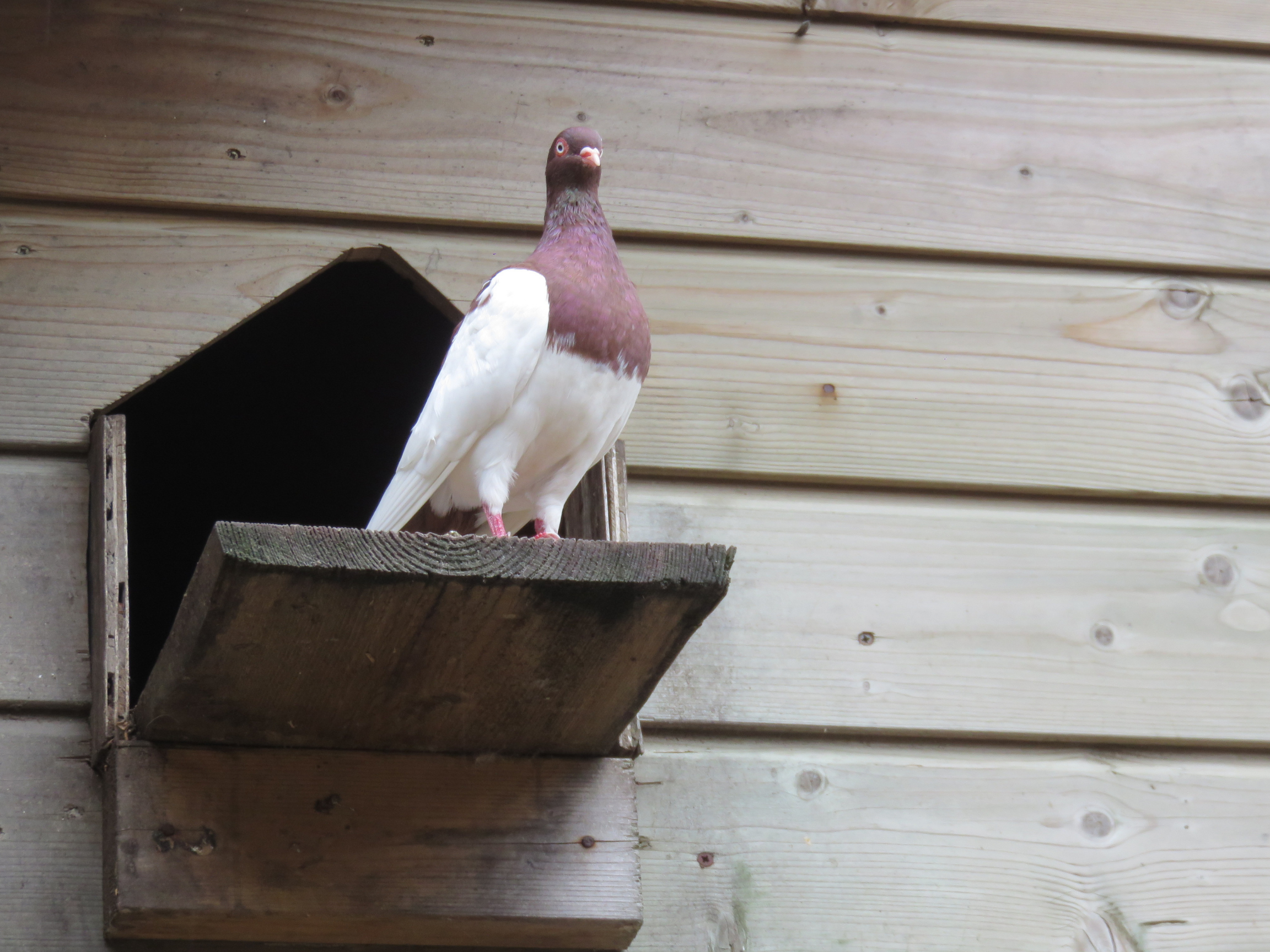
Whether it’s a simple backyard setup or a more elaborate build, the first investment is the loft.
Some people begin with a small, simple structure and expand as they gain experience. Others invest heavily from the start.
Along with the loft itself comes the basic infrastructure — nest boxes, perches, feeders, water systems, traps, and the everyday tools needed to maintain a clean, functional space. There are also plenty of DIY options for things like feeders and drinkers that can help reduce upfront costs.
Beyond the loft and basic setup, there are a few larger equipment considerations. Electronic timing systems (clocks) are one of the bigger investments — used systems can often be found for a few hundred dollars, while new setups can cost quite a bit more depending on the brand and features.
There’s no single right approach, but starting modestly gives beginners more flexibility as they learn what works for them. Starting simple isn’t just about saving money — it gives you room to figure out if the sport is the right fit before going all in.
What works for one flyer doesn’t always work for another, and that’s much easier to discover when you haven’t overbuilt or overspent too early.
The Birds
Bird costs vary dramatically.
Some beginners start with reasonably priced birds from local flyers. Others are drawn to established bloodlines or auction birds that can command much higher prices.
When people talk about “good birds,” they’re usually referring to bloodlines — families of birds with a history of performing well in races. That might include proven racers, strong homing ability, or lines known for specific distances.
Birds are typically sourced through other flyers, local clubs, or auctions — both in person and online. For beginners, starting with local birds can be especially valuable, not just for cost, but for support and birds already suited to the area.
It’s also very common for new flyers to overspend on pedigrees early on.
Strong names and impressive family trees can be appealing, but they don’t guarantee results — especially without the management and experience to bring that potential out.
Well-bred birds are valuable, but without good management, consistency, and experience, even the best stock won’t perform. Those skills matter far more than what was paid for the bird.
Over time, many flyers invest in new bloodlines or upgrade their breeding stock. This is a normal part of the sport — but without the experience to support it, those investments don’t always translate into better results.
Ongoing Costs
This is where many new flyers underestimate the costs of running a competitive loft.
Electronic timing systems (clocks)
Feed
Grit and minerals
Supplements
Club and combine annual membership
Race entry fees
Bands
Fuel for training tosses
These are not one-time expenses. Grain and fuel prices fluctuate. Fees evolve over time.
More birds mean more feed, more care, and more race entries. Even small increases add up season after season.
As Bruce put it, the initial setup is only the beginning — staying in the sport is where the real cost shows up.
Equipment Upgrades
Very few people stay exactly where they started.
Over time, most flyers make adjustments.
That might mean improving the loft, upgrading your clock, adding breeding stock, or buying new baskets for training. These changes aren’t required right away, but they tend to happen naturally as experience builds and goals evolve.
The Hidden Costs
Time is one of the biggest — and most underestimated — investments in pigeon racing.
Time in the loft.
Time training.
Time preparing for races and shipping nights — not to mention managing birds day to day.
This sport becomes part of daily life. Not just for racing results, but for the day-to-day welfare of the birds.
And that time has to come from somewhere.
It often means early mornings, late evenings, and time away from other parts of life — including family. It can impact relationships and other hobbies in ways people don’t always expect at the start.
What that looks like in practice is a consistent, hands-on routine.
During race season, a typical week might include daily loft work like feeding, cleaning, refreshing water, and washing drinkers to keep everything maintained. Birds are let out for loft flying to build fitness and orientation, while their condition is monitored closely — watching how they move, fly, trap, and eat, because small changes often drive the decisions that follow.
Hands-on checks become especially important with young birds — keeping an eye on health, growth, and development.
The week often includes a few training tosses, selecting birds for upcoming races, and managing pairing, breeding, or young bird programs. There’s also time spent at shipping nights, getting birds entered and ready.
And then there’s race day — watching and waiting for birds to return home.
The Financial Reality
If you’re in it for the money, you’re going to be disappointed.
Prize money rarely offsets total expenses.
The return is not financial.
It is competitive satisfaction, skill development, and community.
Understanding this early prevents unrealistic expectations.
A Practical Beginner Perspective
Start small.
Control bird numbers.
Avoid chasing expensive bloodlines before mastering loft management.
Scale gradually as experience grows.
The sport rewards patience — financially as well as competitively.

From Fuzz to Feathers: The Early Life of a Racing Pigeon
It starts with two eggs, two attentive parents, and a process most people never see.
This is the early life of a racing pigeon.
Pigeons don’t exactly have a great reputation.
They get blamed for the mess on balconies, sidewalks, patio tables, and just about anything parked outside for too long.
For a lot of people, they’re something to ignore or avoid.
But that’s only one version of the story.
Racing pigeons live a very different life.
There’s structure to it. A rhythm. A process that starts long before a bird ever sees a race.
From the moment they hatch, everything builds toward one thing—learning how to leave… and find their way home.
This is the part most people never see—how racing pigeons are raised and developed before they ever fly.
It Starts With Two Eggs
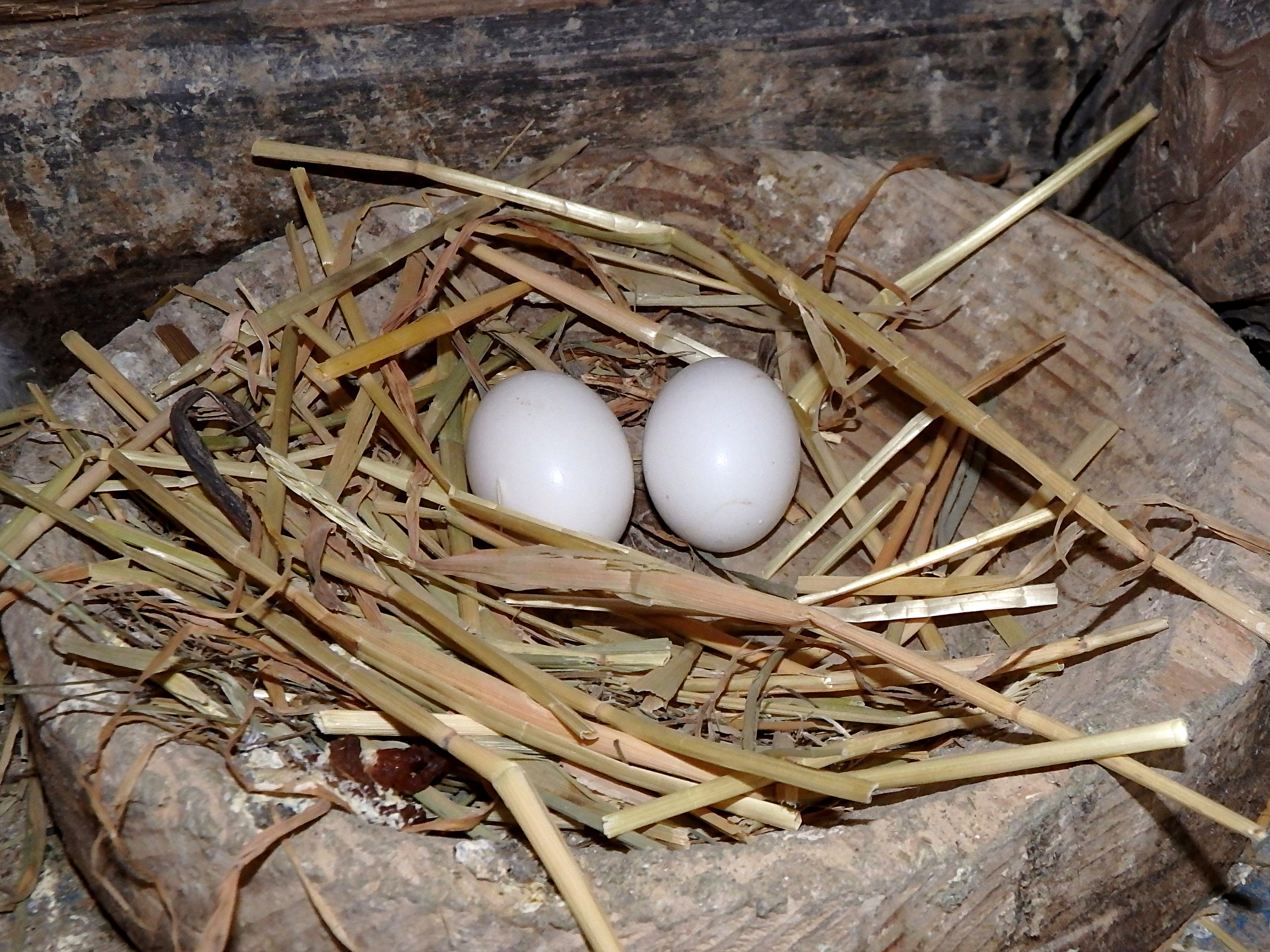
Almost always, it’s two. Not a large clutch. Just two eggs, laid about a day apart. The eggs are white and about half the size of a chicken egg.
From the start, there’s structure here too.
Both parents share the job of incubation—taking turns sitting on the eggs throughout the day and night. While one is on the nest, the other is eating, resting, or moving around the loft before switching back again.
Protecting the eggs from intruders is also vital during this stage. Try to stick your hand in the next box and you’ll be sure to get the whack of a wing and maybe a peck or two.
This stage lasts about 17 to 18 days, depending on the pair and conditions, and from the outside, not much seems to be happening.
But this is where everything begins.
Hatching
Hatching doesn’t happen all at once. Because the eggs are laid about a day apart, one chick often arrives first, with the second following later.
The chick inside begins to pip— and it takes a few hours to break through the shell from the inside.
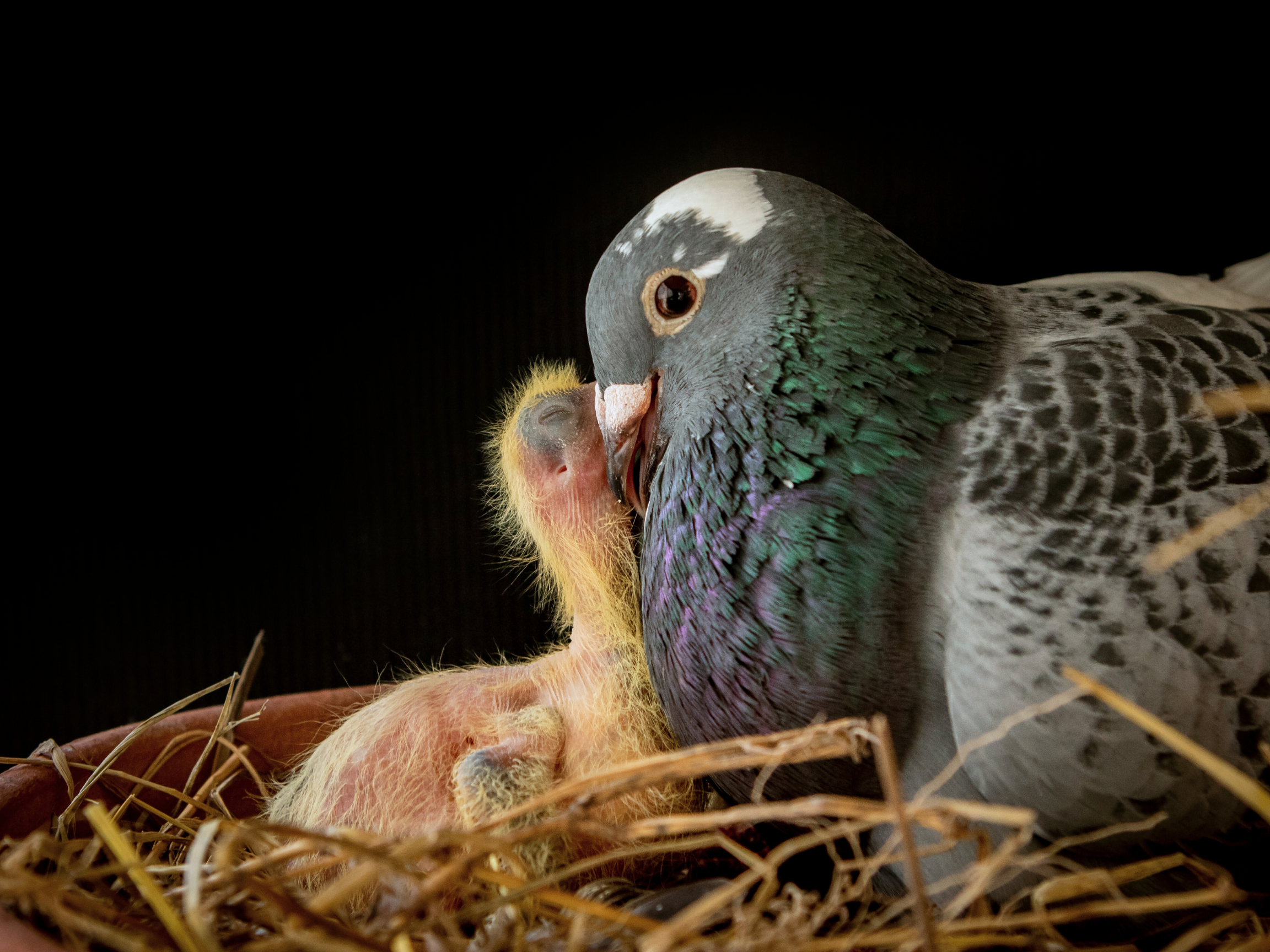
And when they hatch, they’re tiny, a little wet and blind. They’re completely dependent on their parents.
As with the incubation period, both parents take turns tending to the chicks. Keeping them warm and protected, and well fed as they grow.
It’s a fragile stage.
But it doesn’t last long.
First Food Isn’t Seeds
At this stage, the chicks can’t eat on their own.
That’s not surprising—but what is surprising is how pigeons feed their young.
For the first several days of life, both parents produce something called crop milk—a thick, nutrient-rich substance that’s fed directly to the chicks.
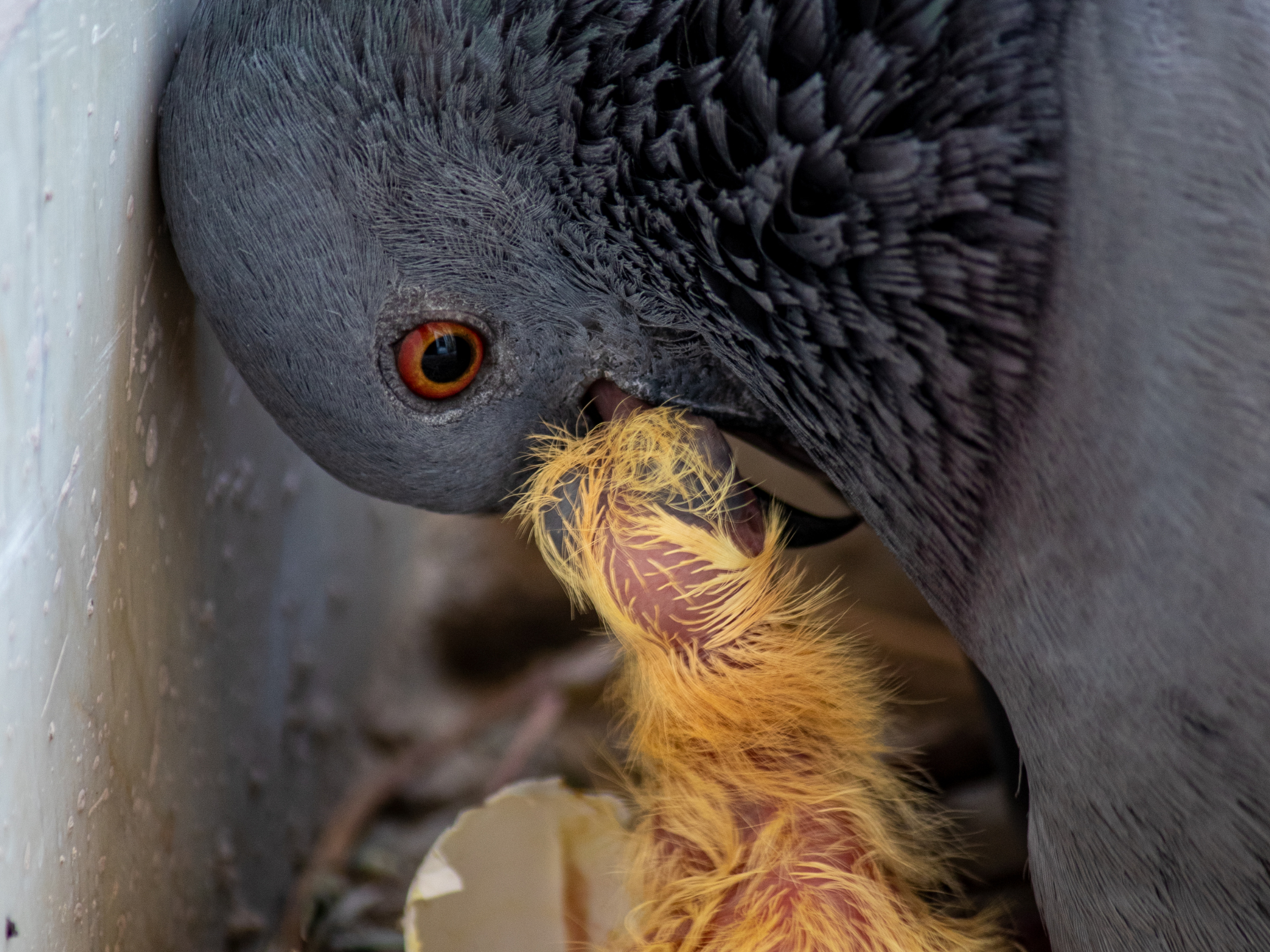
It’s not milk in the way we think of it. It’s produced from the lining of the crop and delivered beak-to-beak, with the chicks reaching up and feeding directly from the parent.
And it’s actually pretty unique in the bird world.
Only a small number of species—like pigeons, doves, and flamingos—produce anything like this. In pigeons, both parents are able to do it.
As the chicks grow, seeds are gradually introduced and mixed in with the crop milk until they’re ready to take in solid food on their own.
Growing Fast
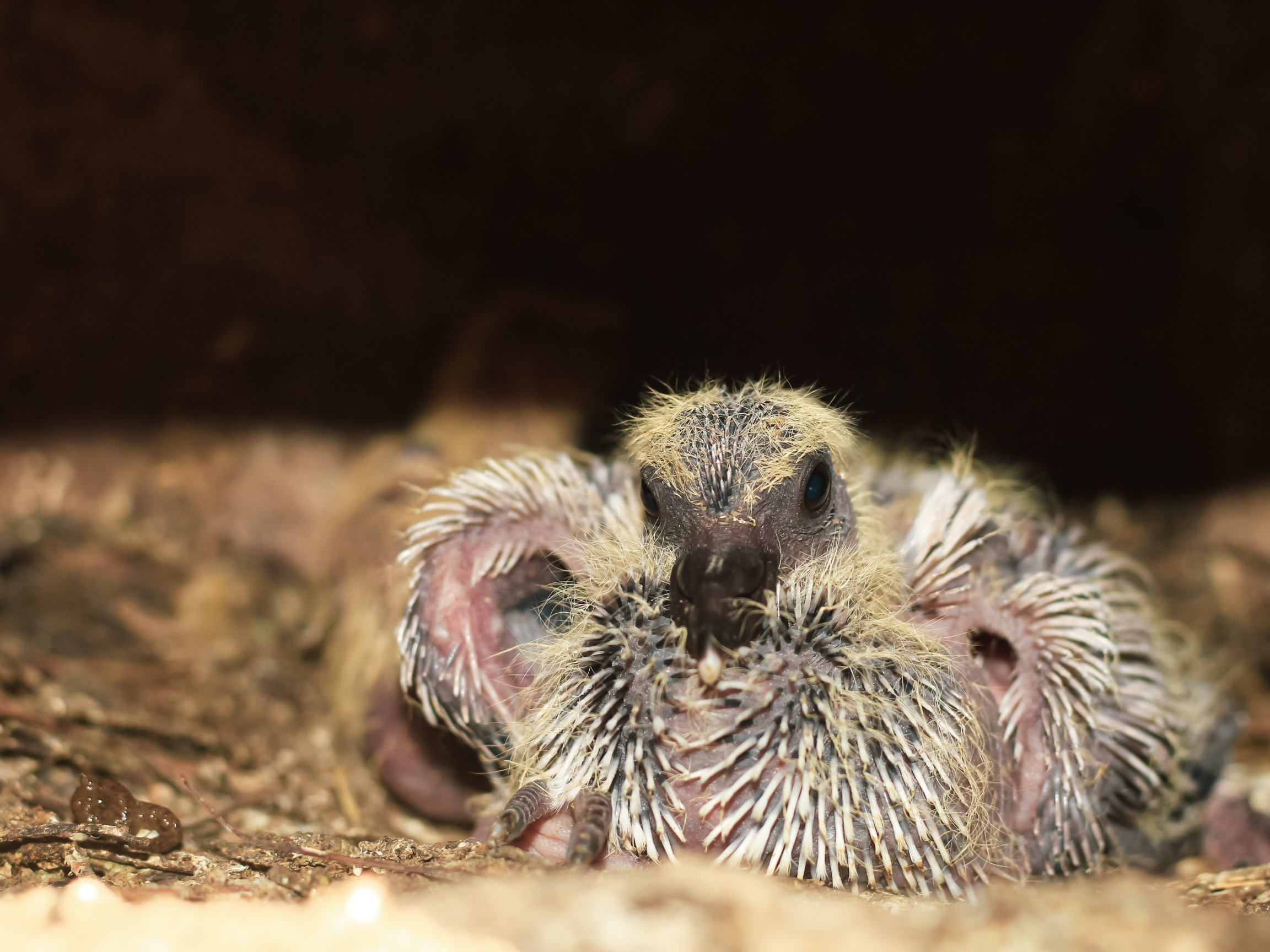
In just a few days, the chicks go from small, fragile hatchlings to opening their eyes and becoming more active in the nest.
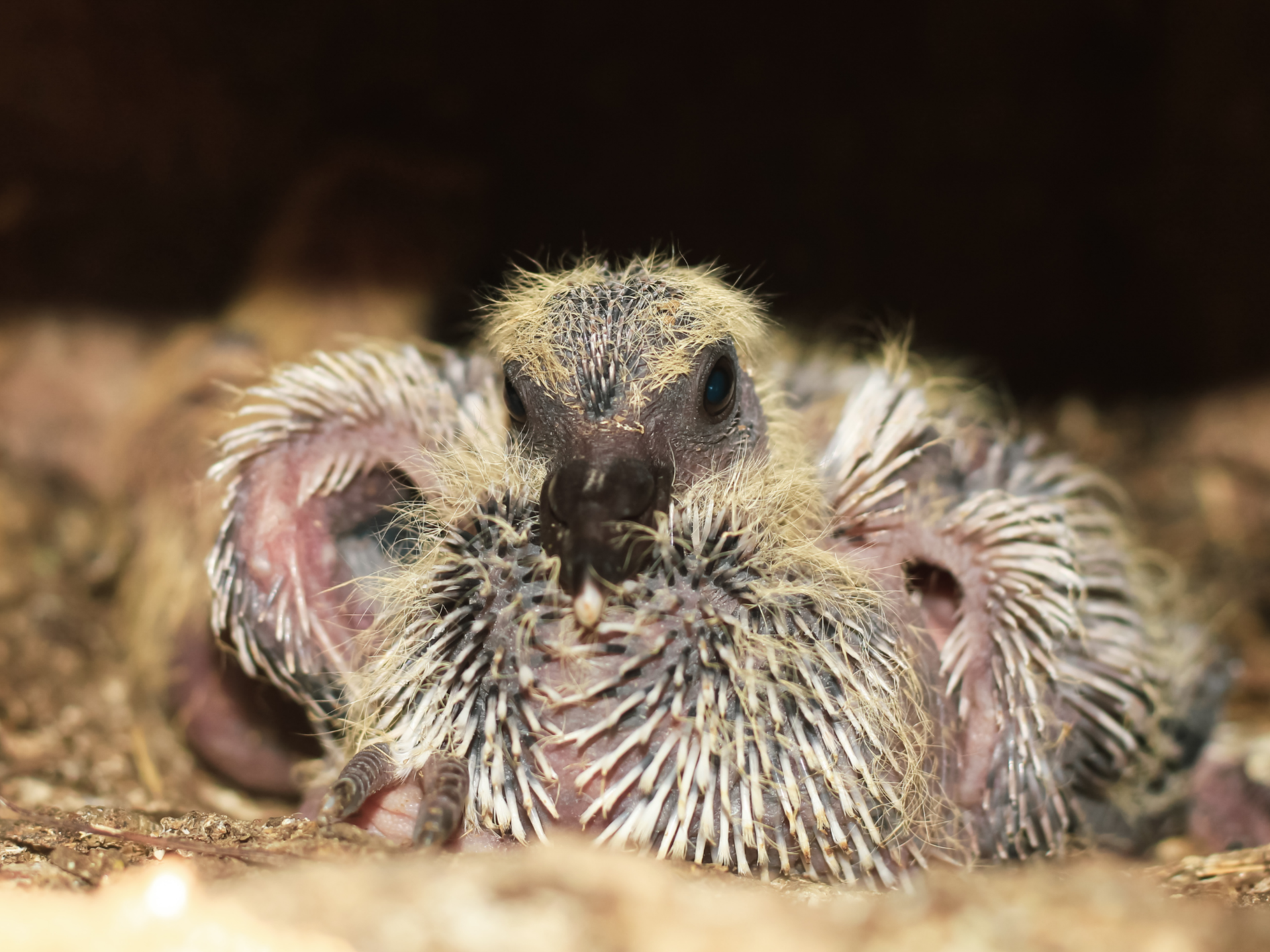
They’re still fully dependent on their parents—but that’s changing fast.
Around 4 to 6 days in, pin feathers start to appear, and over the following days those feathers develop and begin to open.
This is also when the birds are banded.
At this stage, the three front toes are brought together and guided through the band, while the back toe is gently folded forward so the foot can pass through.
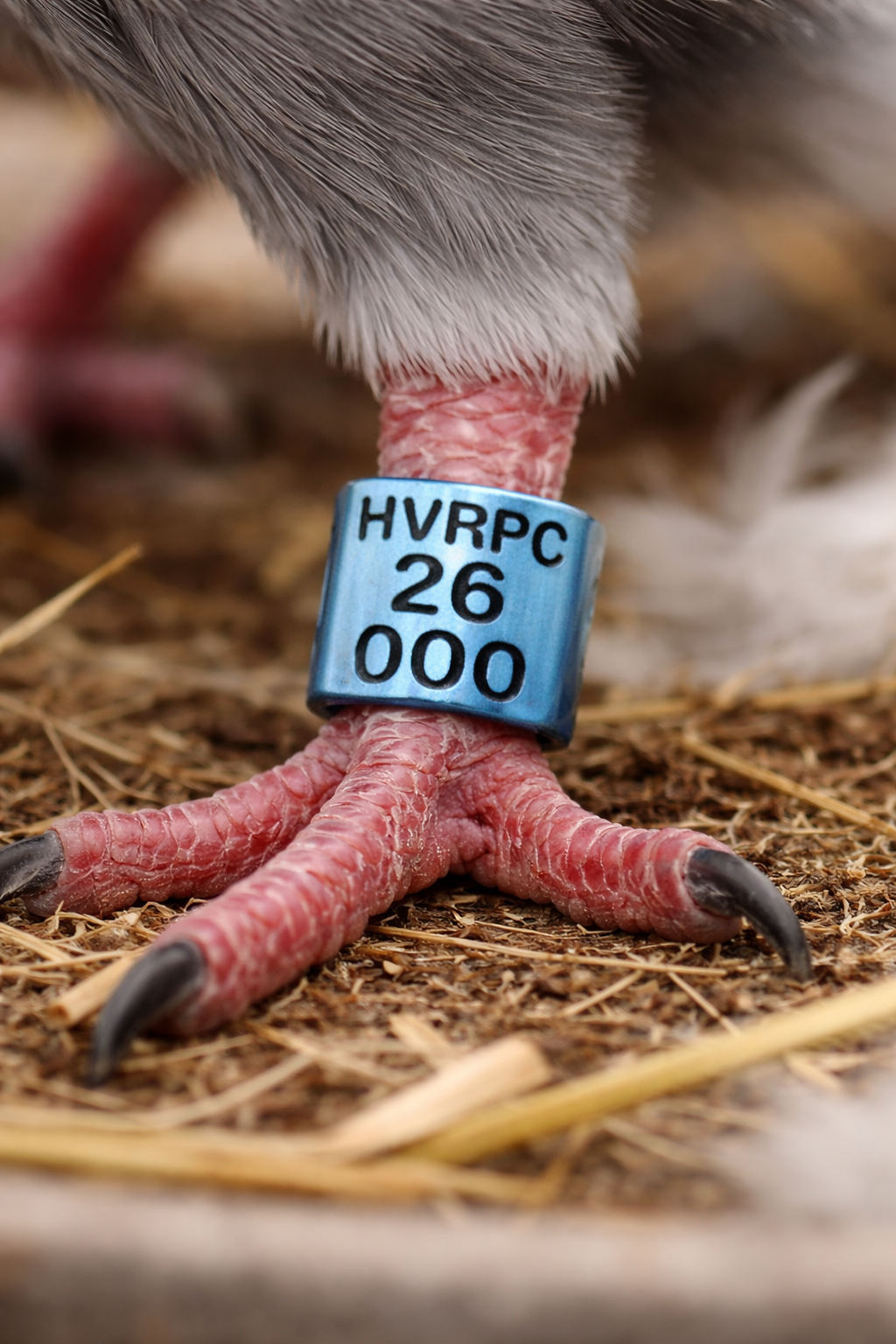
It only works during this short window. As the chick grows and the joints firm up, the band can no longer be put on or removed without causing injury.
From that point on, the band stays in place for life—serving as the bird’s permanent identification for tracking, ownership, and racing records.
Weaning
As the chicks grow and their feathers come in, the parents begin to reduce feeding around 2 to 3 weeks of age.
They’re starting to become more independent—but in a racing loft, that shift is usually managed pretty carefully.
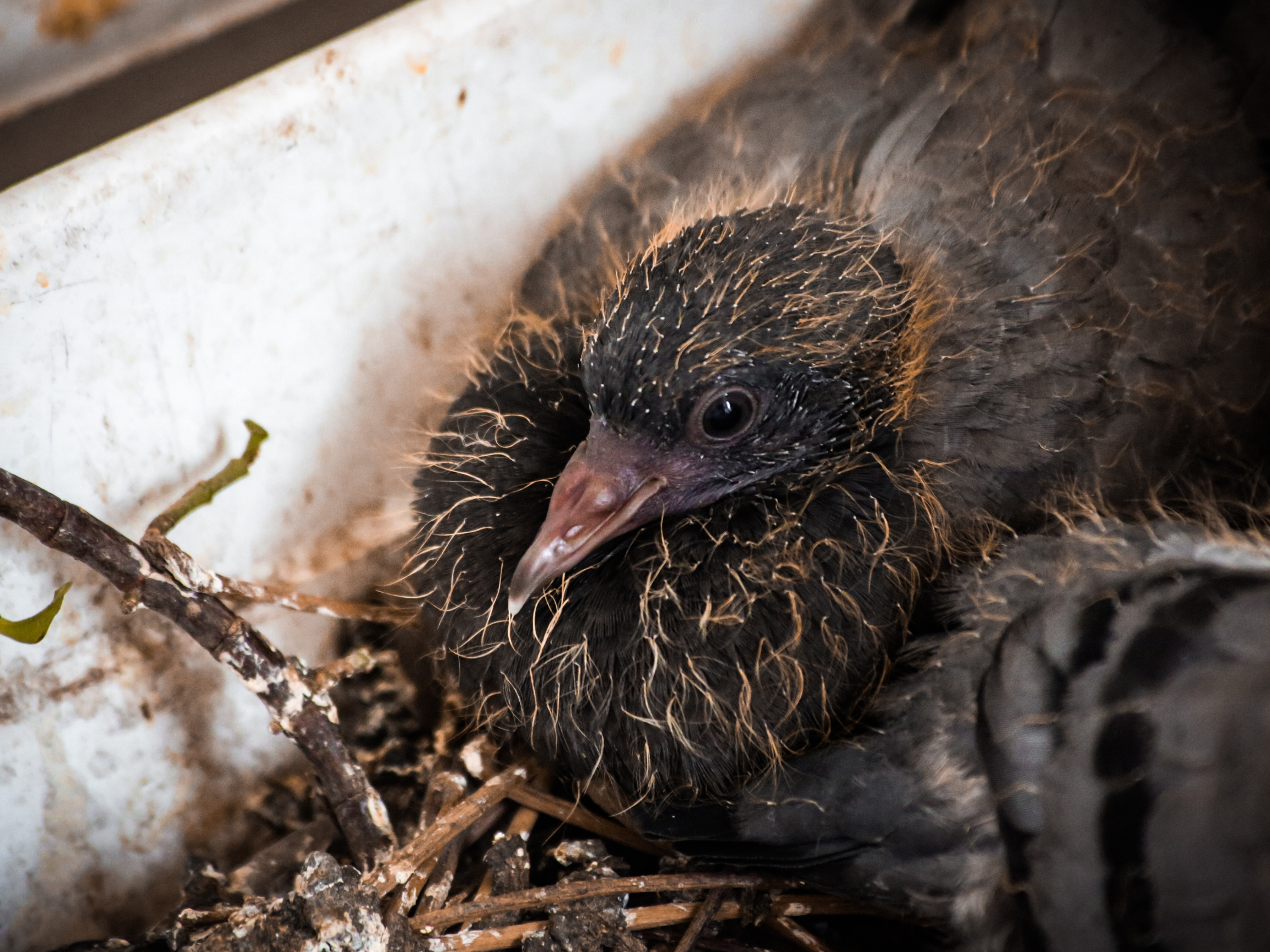
At this stage, they’re able to move around the nest box, where a small feeder and drinker are hung on the side to encourage them to start pecking at seeds and figuring out food on their own.
Once they’re eating and drinking on their own, they’re moved into a separate weaning section or young bird area.
This is where they begin learning the ropes for racing.
They start flapping their wings, building strength, and practicing short movements—flying up onto perches and navigating the loft space.
They’re also given access to the aviary.
From there, they can see outside, feel the air, and start taking in their surroundings without being fully exposed to it yet.
It’s a gradual introduction.
They’re not flying free—but they’re beginning to understand the environment they’ll eventually need to navigate.

The History of Racing Pigeons
Pigeon racing didn’t begin as a sport. It began as a necessity.
Long before organized clubs, electronic timing systems, or international competitions, pigeons were valued for one remarkable trait — their ability to return home across vast distances.
From ancient messenger birds to the structured racing federations of modern times, the sport of pigeon racing is built on centuries of selective breeding, endurance, and trust in a bird’s instinct to find its way home.
From Ancient Messengers to Modern Champions
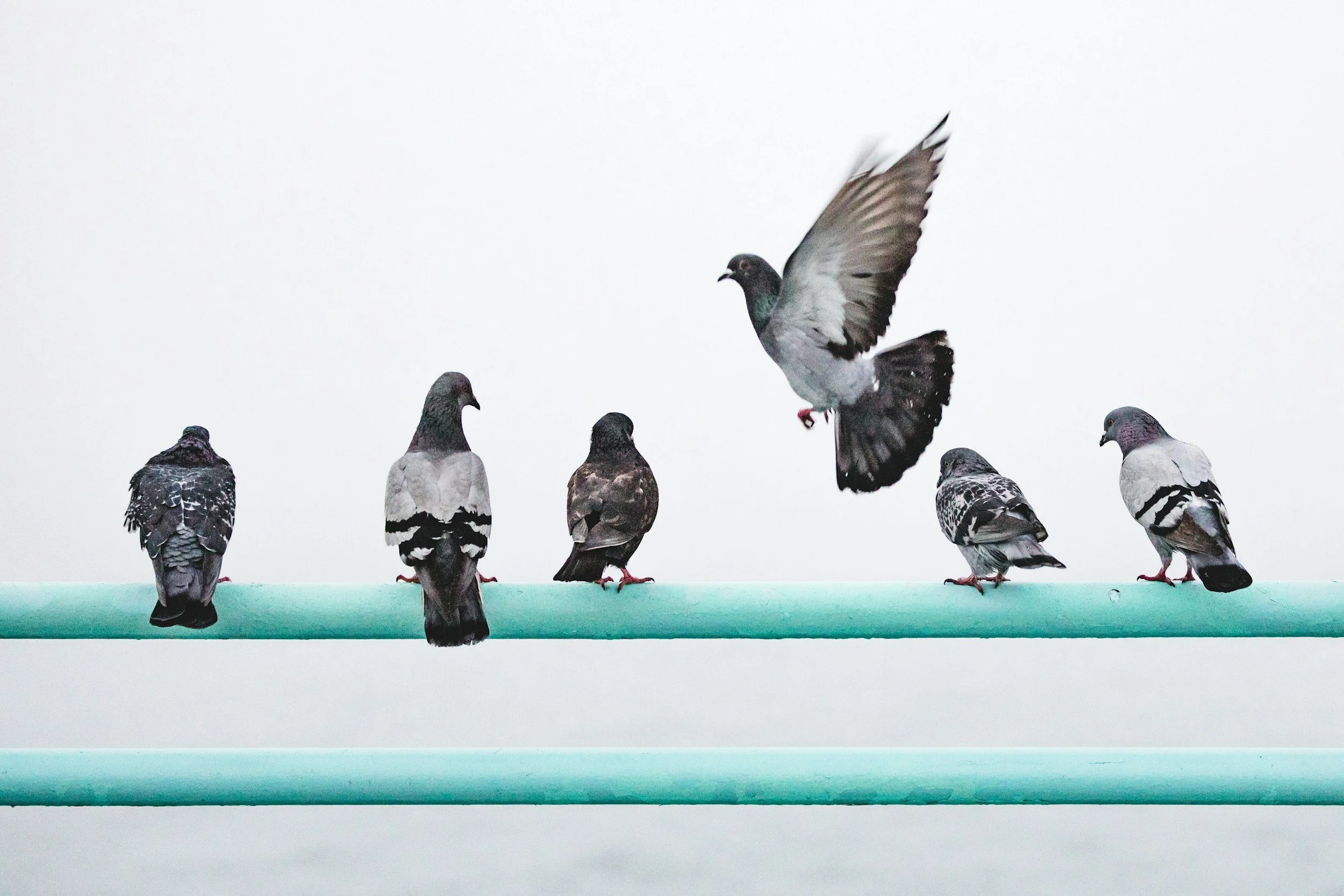
Pigeon racing didn’t begin as a sport.
It began as a necessity.
Long before electronic timing systems, organized clubs, or international competitions, pigeons were valued for one remarkable trait: their ability to return home across vast distances. That instinct — known as homing ability — is the foundation upon which the entire sport of pigeon racing was built.
To understand modern pigeon racing, we have to start thousands of years ago.
Ancient Origins: The Messenger Bird
Racing pigeons descend from the Rock Dove, a species domesticated by humans more than 5,000 years ago.
Ancient civilizations quickly discovered something extraordinary: if a pigeon was transported away from its loft, it could find its way back — sometimes from hundreds of kilometres away.
Pigeons were used by:
The Egyptians
The Persians
The Greeks
The Romans
They carried military updates, trade information, and even news of Olympic victories. In an age before telegraphs or telephones, pigeons were one of the fastest and most reliable communication systems in the world.
They were not bred for beauty.
They were bred for reliability.
Only birds that consistently returned home were used for breeding. Over generations, this selection refined speed, endurance, orientation ability, and strong homing instinct — the same traits valued in racing pigeons today.
The Birth of Organized Racing: Belgium in the 1800s
Modern pigeon racing as a competitive sport began in Belgium in the early 19th century.
Several factors made this possible:
The Industrial Revolution
Expansion of railway systems
Growing interest in selective breeding
Rail transport allowed pigeons to be shipped long distances and released simultaneously. Instead of carrying messages, birds were now racing one another home.
Early fanciers developed:
Formal race distances
Official rules
Mechanical timing clocks
Local clubs and competitions
Belgium became — and remains — the historic heart of pigeon racing. Bloodlines developed there would influence lofts across Europe and eventually the world.
From Belgium, the sport spread to:
The United Kingdom
France
Germany
The Netherlands
North America
What began as informal contests evolved into organized competition with structure, prestige, and tradition.
📜 Historical Legend: Pigeons and the Battle of Waterloo
A popular story claims the Rothschild banking family received early news of Napoleon’s defeat via carrier pigeon and used that information to gain an advantage on the London Stock Exchange.
Most historians consider the dramatic stock-market manipulation version exaggerated or unproven. However, it is true that fast private communication networks — including messengers and possibly pigeons — were extremely valuable in the early 1800s.
Pigeons at War: World War I and II
Even as the sport grew, pigeons continued to serve in times of crisis.
During both World War I and World War II, military forces relied heavily on carrier pigeons to deliver messages when radio communication was unreliable or intercepted.
One of the most famous war pigeons was Cher Ami.
In 1918, during World War I, Cher Ami delivered a critical message that helped save nearly 200 American soldiers who had been cut off behind enemy lines. Despite being severely injured, the bird completed the flight and was later awarded the French Croix de Guerre for bravery.
Stories like this reinforced public respect for pigeons — not just as racing birds, but as dependable partners in some of history’s most dangerous moments.
Their role in wartime also accelerated breeding for stamina, intelligence, and orientation — traits that further strengthened the racing bloodlines.
The Evolution of the Sport
As communication technology advanced, pigeons were no longer needed for messaging. But the sport continued to grow.
By the mid-20th century, pigeon racing had become firmly established across Europe and North America, with structured federations, race schedules, and formalized rules.
Key developments included:
Mechanical Timing Clocks
Fanciers used clocking systems that recorded the exact arrival time of each bird.
Standardized Bands
Each pigeon received a unique identification band, ensuring accurate tracking and verification.
Federation Racing
Regional clubs formed larger federations to coordinate long-distance events.
Electronic Timing Systems (ETS)
In recent decades, electronic timing replaced manual clocking, increasing accuracy and efficiency.
Today, races range from short “sprint” distances to extreme long-distance endurance events covering hundreds of kilometres.
In some parts of the world, particularly in Europe and Asia, elite racing pigeons have sold for extraordinary sums — sometimes in the hundreds of thousands or even millions of dollars — reflecting the high value placed on proven genetics and performance.
The Foundation Remains the Same
Despite technological advancements, the core of pigeon racing has not changed.
It is still about:
Selective breeding
Conditioning and training
Understanding the bird
Trust in the homing instinct
The modern racing pigeon is the result of centuries of refinement. From ancient messenger birds to Belgian racing pioneers, from wartime heroes to today’s championship lofts, the sport rests on one constant principle:
A pigeon’s drive to return home.
That instinct — powerful, reliable, and deeply ingrained — is what transformed a simple messenger bird into one of the world’s oldest and most enduring competitive sports.
Looking Ahead
Understanding the history of racing pigeons provides context for everything that follows — breeding strategies, training methods, race systems, and modern competition formats.
The sport is built on tradition.
And like the pigeons themselves, those traditions have travelled a long way.